SPORTS PHYSIOTHERAPY BASEL
Sports Physiotherapy in Basel
You want to get back to running, cycling, strength training or your sport, but something is still holding you back? It may be pain, weakness or simply hesitation. Daily life can feel almost normal, then the load increases and the problem suddenly becomes obvious again.
This is exactly where sports physiotherapy starts for me. The diagnosis matters, of course, but it is only one part of the picture. The more useful question is what you want to be able to do again. Run 10 km? Get back on a mountain bike? Change direction without thinking about the knee first? Return to training after surgery? The answer changes the rehabilitation plan.
Common injuries and conditions
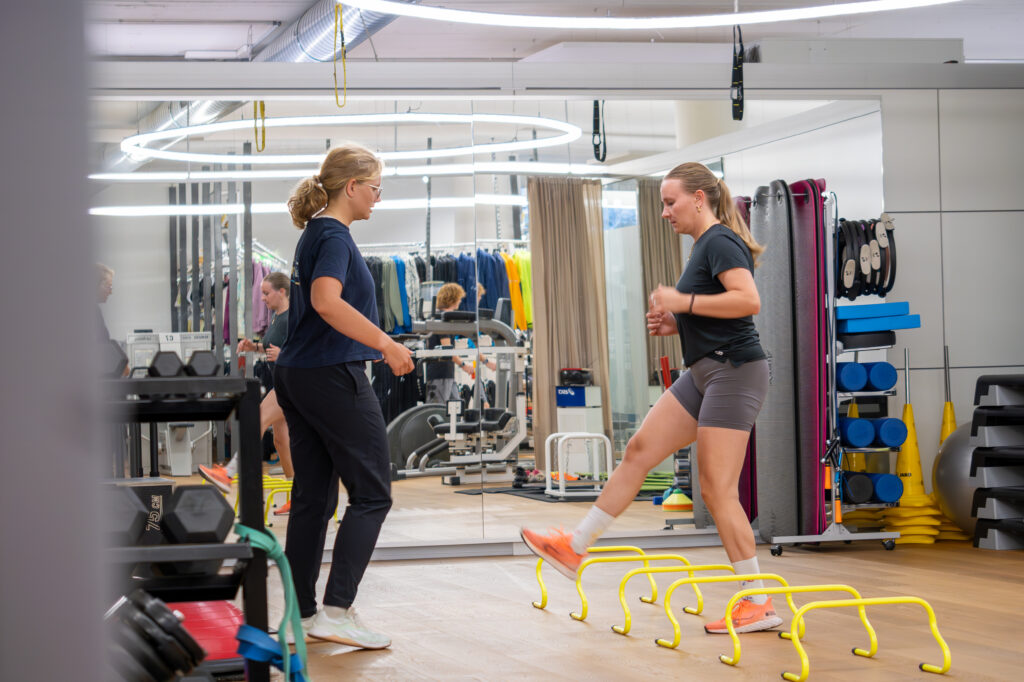
Sports physiotherapy is not tied to one sport or one diagnosis. Very often, the job is simply to rebuild enough strength, control and load tolerance for the activity you actually want to return to.
Knee
ACL injury or reconstruction, meniscus surgery, patellofemoral pain, patellar tendinopathy or lack of confidence with jumping and change of direction.
Ankle & foot
Repeated ankle sprains, ligament injuries, instability, problems after fractures, Achilles tendon issues or pain during running and jumping.
Muscles & tendons
Hamstring or calf injuries, adductor pain, Achilles or other tendinopathies and recurring overload problems.
Hip & back
Pain under load, strength deficits or difficulty returning to running, cycling, skiing or strength training.
Shoulder
Instability, rotator cuff problems or post-operative rehabilitation when strength, control and load tolerance need to be rebuilt.
After surgery
When standard rehabilitation is already well underway and daily life is improving, but you still do not feel ready for physical work, training or sport.
Even if your diagnosis is not listed here, a sports physiotherapy assessment can be useful whenever symptoms limit your ability to return to the activity that matters to you.
How I work in sports physiotherapy
My goal is not to keep you in treatment for as long as possible. Quite the opposite. We need to understand what is limiting you now, rebuild enough capacity, then gradually hand the work back to you. Independence is the end point.
Understand
We start with the context: injury history, training, daily demands and the goal you care about. Then I assess the things that matter for that goal (mobility, strength, control and the specific functions your activity requires).
Build load tolerance
Rehabilitation is as active as possible. Strength training, coordination, jumping, change of direction and sport-specific tasks are progressed according to your situation.
Test instead of guessing
Throughout rehabilitation, we check whether strength, load tolerance and function are genuinely changing. Time matters, but it does not make the decision on its own. A return to sport should make sense functionally as well.
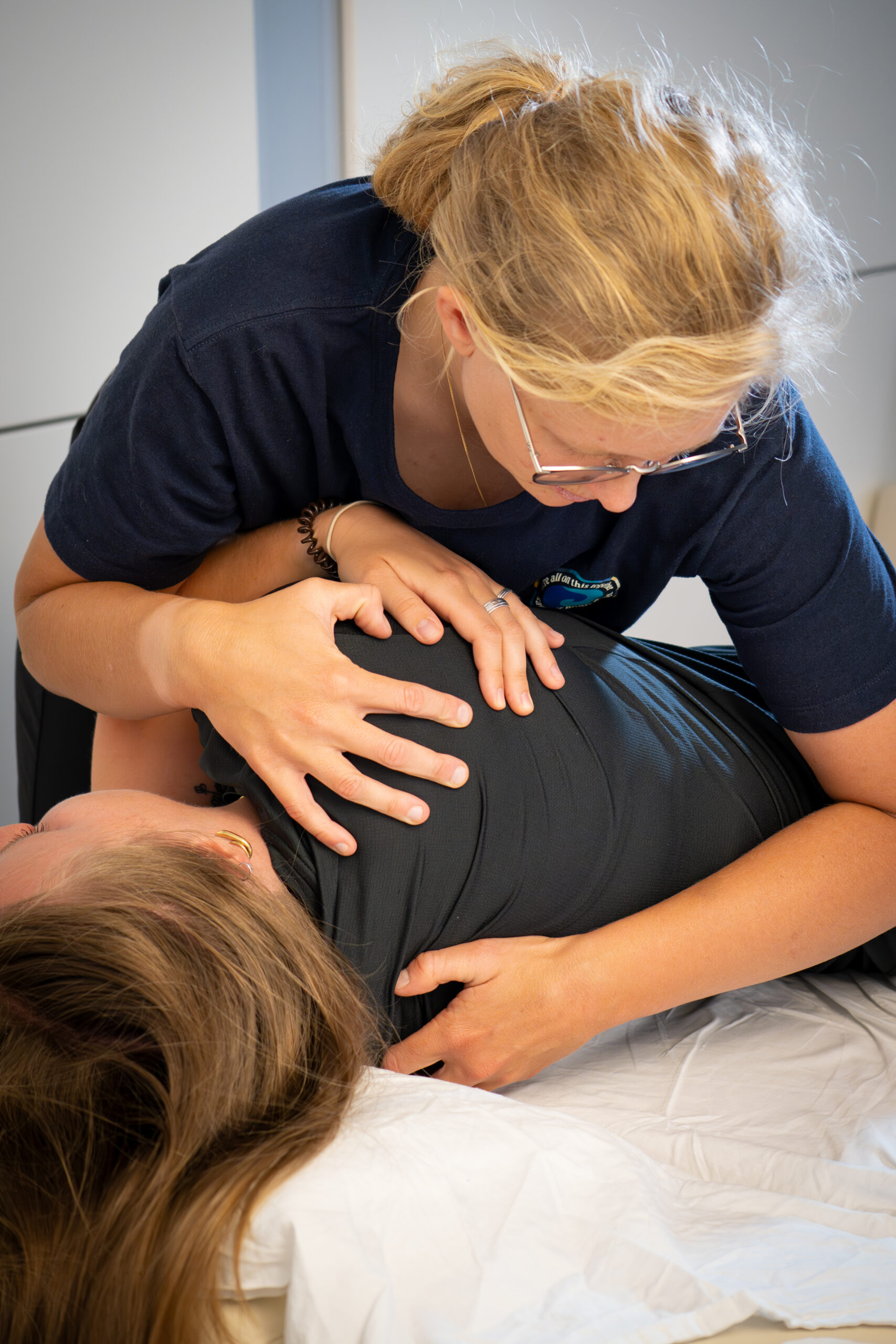
Manual therapy, mobilisation or other passive techniques can be part of treatment when they help restore movement and make active rehabilitation possible. The long-term focus remains progressive loading and independence.
For runners and cyclists, I also consider training load and sport-specific demands. More about endurance and outdoor sports physiotherapy. For more ambitious athletes, rehabilitation can also transition into broader athlete support.
Sports physiotherapy is not only for sports injuries
The term can make it sound as if you need to be a competitive athlete. For me, sports physiotherapy mainly describes a way of working: understanding load tolerance, rebuilding it actively and measuring progress through function. This approach can also be useful for back or neck pain, osteoarthritis, shoulder problems, recurring pain or after surgery.
1
Load tolerance instead of permanent avoidance
Load is matched to what is possible now and then increased step by step rather than avoided indefinitely.
2
Active treatment and strength building
Strength, endurance, movement quality and confidence in your body are rebuilt in a targeted way.
3
Concrete goals for daily life and work
The goal does not have to be competition. It may be getting back to work, walking longer, climbing stairs or managing daily life with fewer limitations.
Sports physiotherapy does not mean everyone has to do sport. It means planning rehabilitation around function, load and independence.
With or without a medical prescription
With a prescription
Treatment is billed according to Swiss health or accident insurance tariffs. Prescription appointments usually last 25 minutes and combine assessment, active rehabilitation and manual techniques when appropriate.
Without a prescription
For private patients, I offer 45-minute appointments for 120 CHF. These are especially suitable for in-depth assessments, complex sports-related questions, Return to Sport planning or preventive support.
Not sure which appointment is right for you? You can find practical information on the Book an appointment page.
You may also be interested in
Read more about endurance and outdoor sports physiotherapy, athlete support and performance, or explore the full physiotherapy services in Basel.
Contact & Appointments
Physio-Sport Brecheisen – Basel
Do you have a question or would you like to book an appointment?
I am happy to answer your questions and support you throughout your rehabilitation. You can contact me by phone, email or WhatsApp.

Phone number
Address
Open hours
Tuesday to Friday : 08h00 – 18h00
Tuesday and Thursday : open until 20h00